
Infinity Journal Volume 15 Issue 3 (August 2026) has been available online since June 30, 2026, for the regular issue of August 2026. All articles in this issue (14 research articles) cover 57 authors from 8 countries of origin (Australia, China, Ecuador, Indonesia, Japan, Malaysia, Mexico, and Slovakia).
DOI: https://doi.org/10.22460/infinity.v15i3
Published: 2026-08-01
Articles
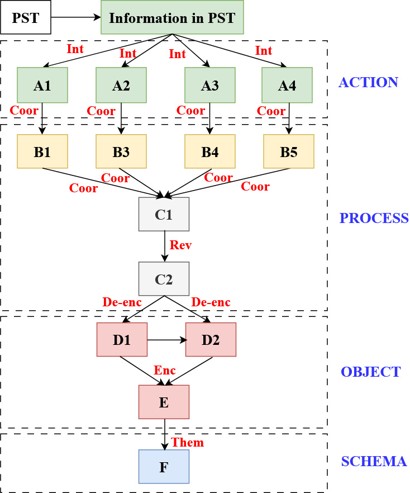
Students’ mathematical problem-solving processes based on learning styles: An APOS theory and Newman’s error analysis perspective
 DOI:
DOI:  Abstract views: 0
 PDF downloads: 0
643-670 Pages
 Kelly Angelly Hevardani,
Department of Education Sciences, Universitas Negeri Padang,
Indonesia
Yerizon Yerizon,
Department of Mathematics, Universitas Negeri Padang,
Indonesia
Yarman Yarman,
Department of Mathematics, Universitas Negeri Padang,
Indonesia
Armiati Armiati,
Department of Mathematics, Universitas Negeri Padang,
Indonesia
Kelly Angelly Hevardani,
Department of Education Sciences, Universitas Negeri Padang,
Indonesia
Yerizon Yerizon,
Department of Mathematics, Universitas Negeri Padang,
Indonesia
Yarman Yarman,
Department of Mathematics, Universitas Negeri Padang,
Indonesia
Armiati Armiati,
Department of Mathematics, Universitas Negeri Padang,
Indonesia
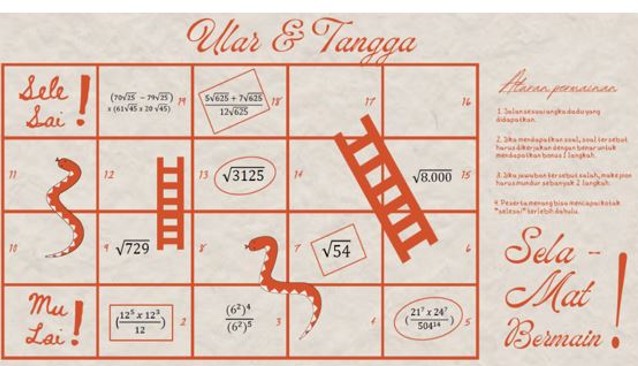
Is maths really a ‘difficult’ subject for learners in Indonesia?: A case study at Tara Salvia junior high school
Abstract views: 0
PDF downloads: 0
671-698 Pages
Maifalinda Fatra,
Department of Mathematics Education, Universitas Islam Negeri Syarif Hidayatullah Jakarta,
Indonesia
Adison Adrianus Sihombing,
Research Center for Treasures of Religious and Civilization, Badan Riset dan Inovasi Nasional,
Indonesia
Mohd Faizal Nizam Lee bin Abdullah,
Department of Science and Mathematics, Universiti Pendidikan Sultan Idris,
Malaysia
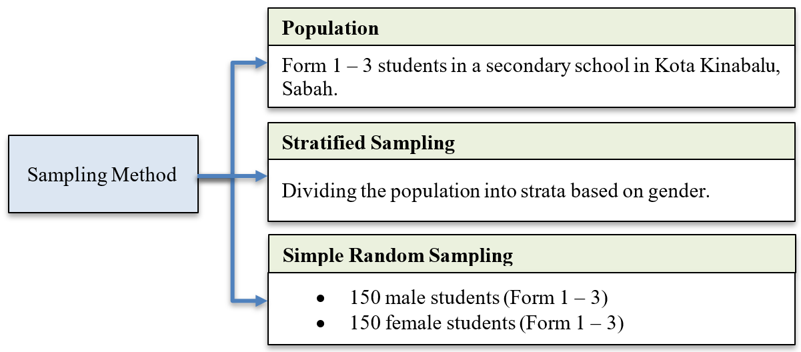
Mathematics anxiety, achievement, and gender among secondary school students in Kota Kinabalu, Sabah
Abstract views: 0
PDF downloads: 0
699-716 Pages
Jackson Wong Sing Xiang,
Faculty of Education and Sports Studies, Universiti Malaysia Sabah,
Malaysia
Nur Farha Shaafi,
Faculty of Education and Sports Studies, Universiti Malaysia Sabah,
Malaysia
Ika Maryani,
Department of Doctoral Program of Education, Universitas Ahmad Dahlan,
Indonesia
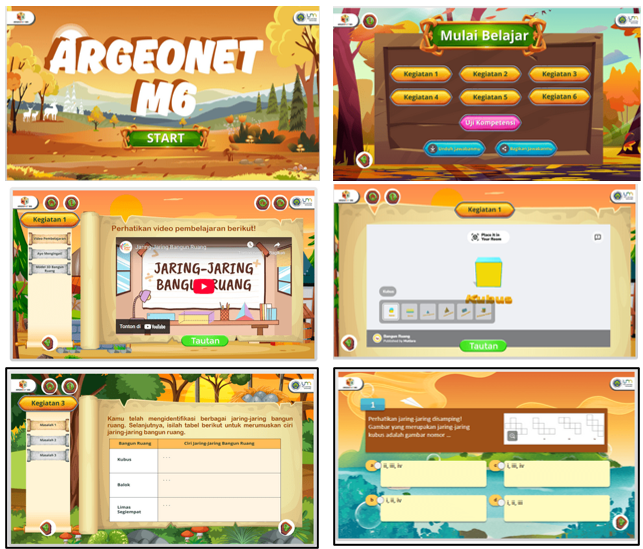
Development of ARGEONET integrated with metaverse and M6 learning model to enhance students’ mathematical critical thinking skills
Abstract views: 0
PDF downloads: 0
717-756 Pages
Puguh Darmawan,
Department of Mathematics, Universitas Negeri Malang,
Indonesia
Imam Rofiki,
Department of Mathematics, Universitas Negeri Malang,
Indonesia
Tajularipin Sulaiman,
Department of Foundations of Education, Universiti Putra Malaysia,
Malaysia
Ardi Dwi Susandi,
Department of Mathematics Education, Universitas Terbuka,
Indonesia
Thesa Kandaga,
Department of Mathematics Education, Universitas Terbuka,
Indonesia
Siti Fatimah,
Department of Mathematics Education, Universitas Pendidikan Indonesia,
Indonesia
Entit Puspita,
Department of Master of Pedagogy, Universitas Nusa Putra,
Indonesia
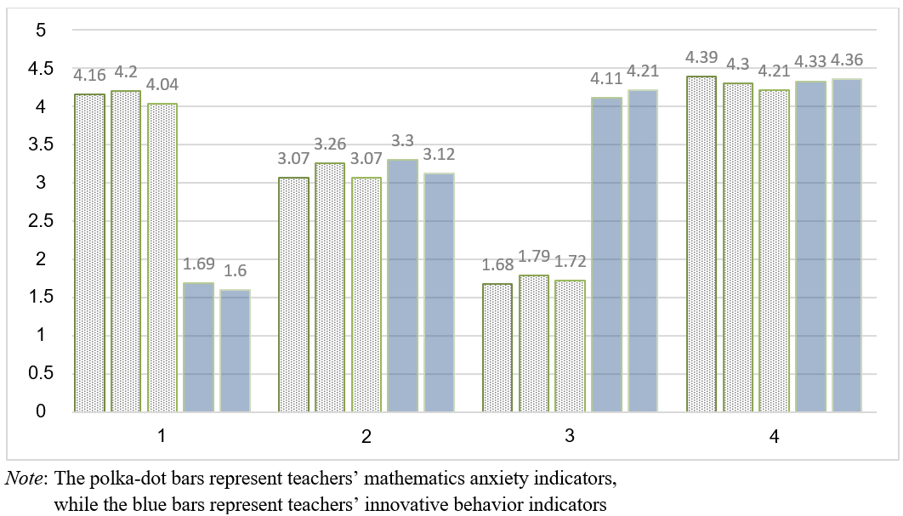
Profiles of K–12 mathematics teachers’ innovative behavior: A latent profile analysis
Abstract views: 0
PDF downloads: 0
757-772 Pages
Heris Hendriana,
Department of Mathematics Education, Institut Keguruan dan Ilmu Pendidikan Siliwangi,
Indonesia
Xiaoying Chen,
School of Mathematical Sciences, China West Normal University,
China
Lilla Korenova,
Faculty of Education, Comenius University Bratislava,
Slovakia
Tommy Tanu Wijaya,
Graduate School, Universitas Negeri Malang,
Indonesia
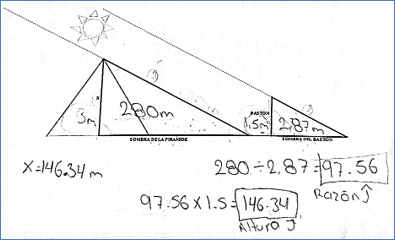
Exploring the nature of mathematical connections in pre-university students’ triangle similarity tasks
Abstract views: 0
PDF downloads: 0
773-786 Pages
Elizabeth Santos-Casildo,
Facultad de Matemáticas, Universidad Autónoma de Guerrero,
Mexico
Javier García-García,
Facultad de Matemáticas, Universidad Autónoma de Guerrero,
Mexico
Aloisius Loka Son,
Department of Mathematics Education, Universitas Timor,
Indonesia
Gerardo Salgado-Beltrán,
Facultad de Matemáticas, Universidad Autónoma de Guerrero,
Mexico
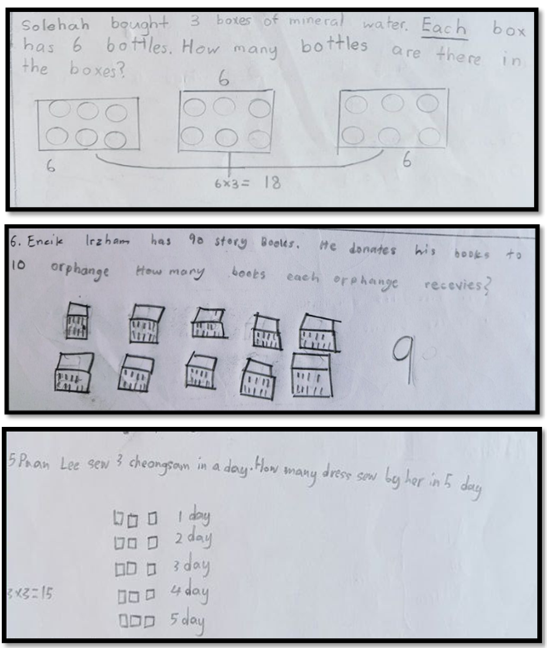
The efficacy of sketching techniques as a visual scaffolding tool for enhancing mathematical word problem-solving among lower primary students
Abstract views: 0
PDF downloads: 0
787-800 Pages
Syaza Hazwani Zaini,
Fakulti Pembangunan Manusia, Universiti Pendidikan Sultan Idris,
Malaysia
Mohd Afifi Bahurudin Setambah,
Fakulti Pembangunan Manusia, Universiti Pendidikan Sultan Idris,
Malaysia
Ealakumy Ealakumy,
Fakulti Pembangunan Manusia, Universiti Pendidikan Sultan Idris,
Malaysia
Azli Ariffin,
Fakulti Pembangunan Manusia, Universiti Pendidikan Sultan Idris,
Malaysia
Muhammad Syawahid,
Faculty of Tarbiyah and Teacher Training, Universitas Islam Negeri Mataram,
Indonesia
Hayato Hanazono,
Faculty of Education, Miyagi University of Education,
Japan
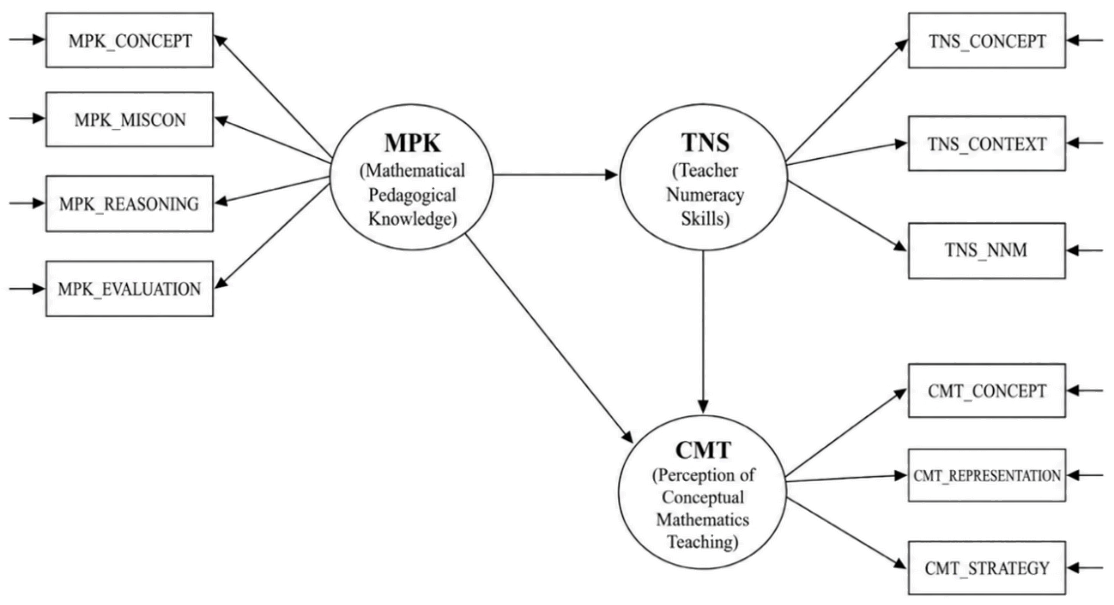
Mediating role of teacher numeracy in shaping conceptual mathematics teaching perceptions: Evidence from early elementary teachers
Abstract views: 0
PDF downloads: 0
801-830 Pages
Euis Eti Rohaeti,
Department of Mathematics Education, Institut Keguruan dan Ilmu Pendidikan Siliwangi,
Indonesia
Sri Adi Widodo,
Department of Mathematics Education, Universitas Sarjanawiyata Tamansiswa and EduDev Transformative Education Research Center,
Indonesia
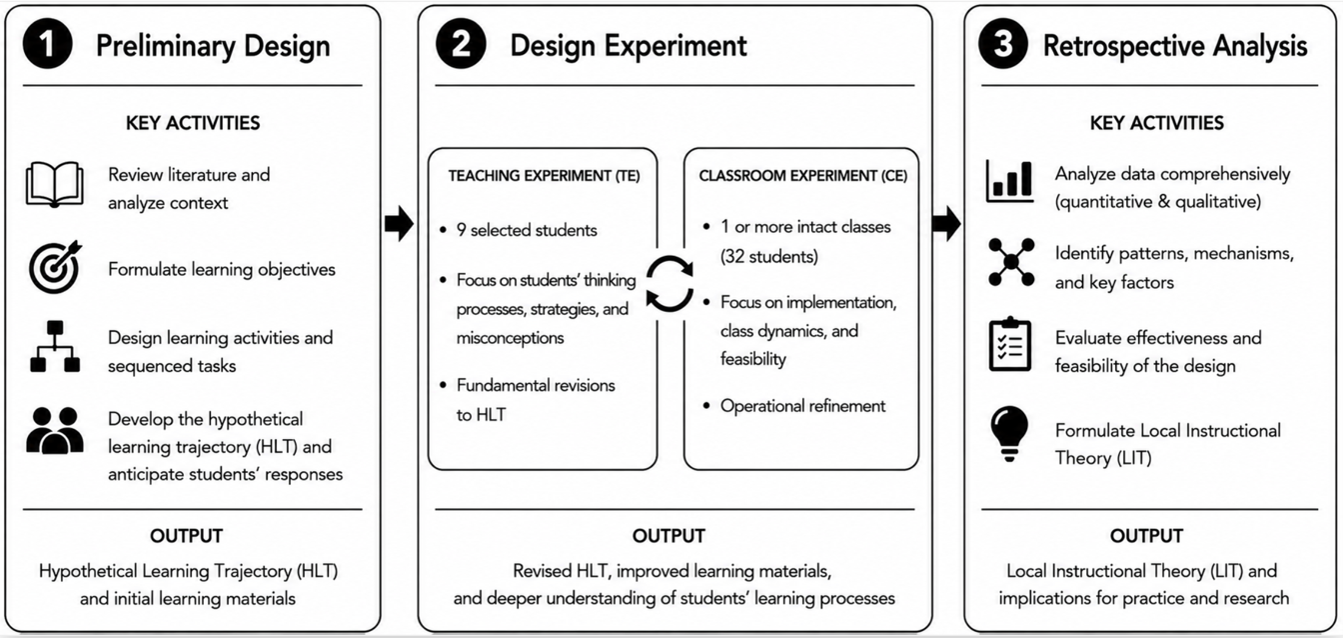
Fostering methodological reasoning in pre-service mathematics teachers: A hypothetical learning trajectory for quasi-experimental design
Abstract views: 0
PDF downloads: 0
831-862 Pages
Jeinne Mumu,
Department of Mathematics Education, Universitas Papua,
Indonesia
Lisnani Lisnani,
Department of Mathematics Education, Universitas Negeri Surabaya,
Indonesia
Benidiktus Tanujaya,
Department of Mathematics Education, Universitas Papua,
Indonesia
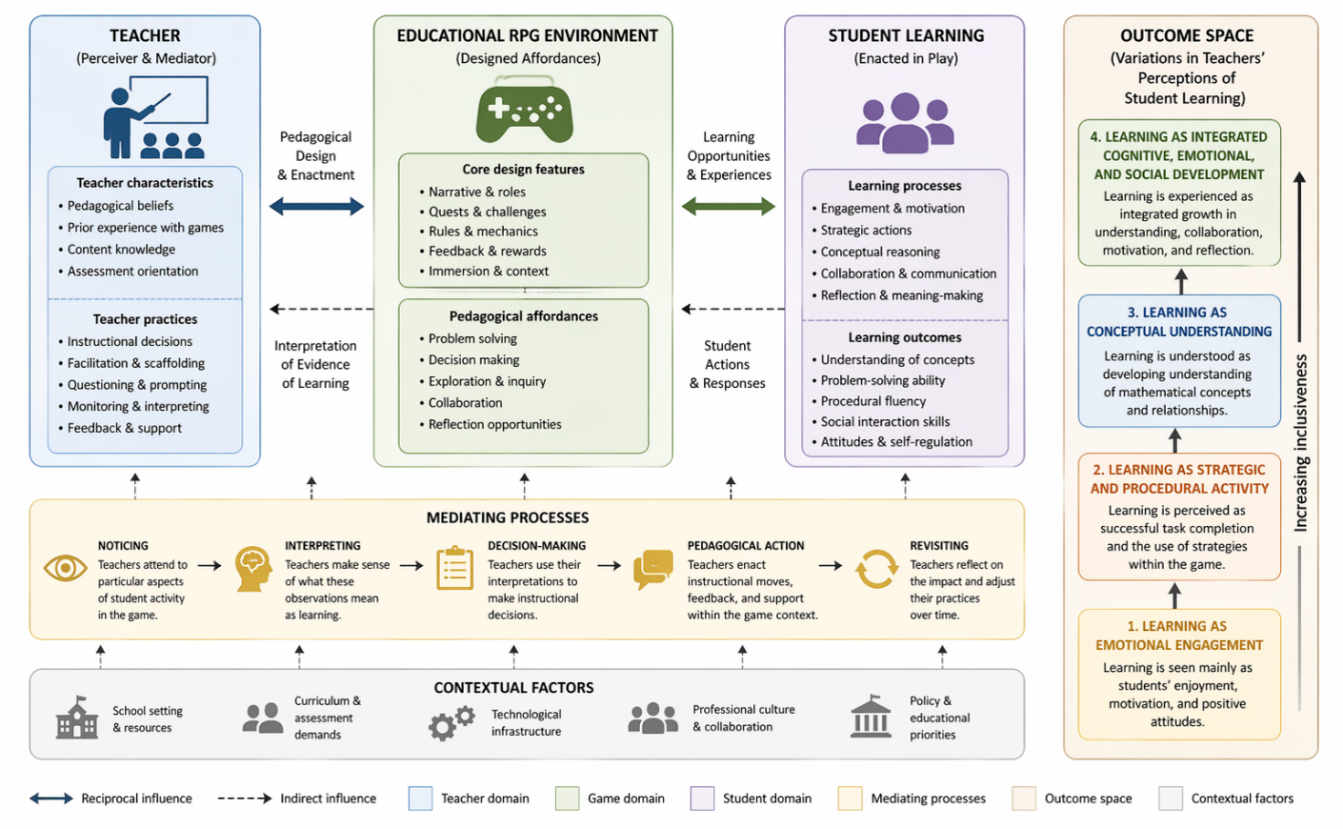
Teachers' perceptions of student learning during educational role-playing game instruction: A phenomenographic study of grades 7–9 mathematics teachers
Abstract views: 0
PDF downloads: 0
863-882 Pages
Surya Amami Pramuditya,
Department of Mathematics Education, Universitas Swadaya Gunung Jati,
Indonesia
Ida Hamidah,
Department of Mathematics Education, Universitas Swadaya Gunung Jati,
Indonesia
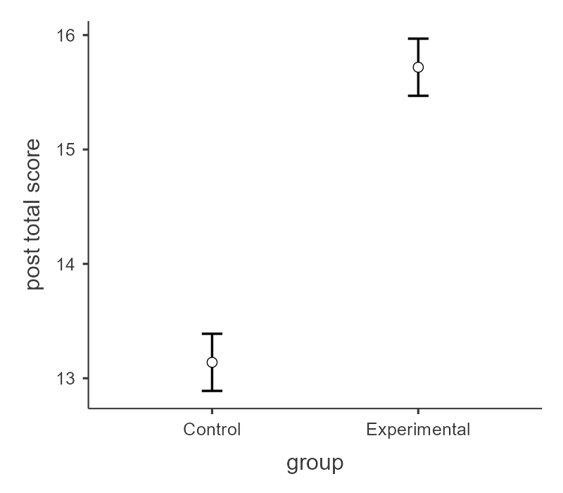
AI-supported neuroeducational methodologies and logical-mathematical thinking in teacher training
Abstract views: 0
PDF downloads: 0
883-900 Pages
Magaly Margarita Narváez-Rios,
Facultad de Ciencias Humanas y de la Educación, Educación Básica, Universidad Técnica de Ambato,
Ecuador
Mayra Fernanda Quiñónez-Bedón,
Facultad de Ciencias Humanas y de la Educación, Hotelería y Turismo, Universidad Técnica de Ambato,
Ecuador
Daniel Morocho-Lara,
Facultad de Ciencias Humanas y de la Educación, Educación Básica, Universidad Técnica de Ambato,
Ecuador
Raúl Yungán-Yungán,
Facultad de Ciencias Humanas y de la Educación, Educación Básica, Universidad Técnica de Ambato,
Ecuador
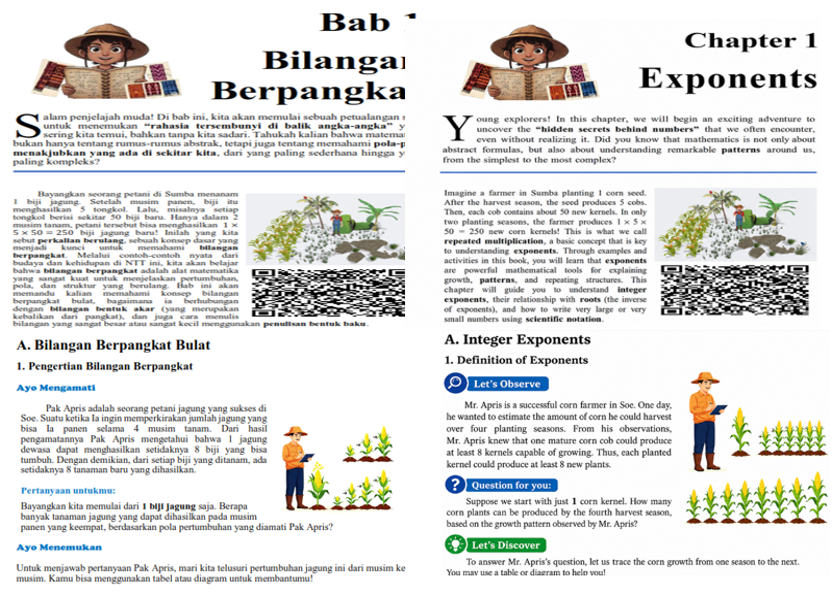
Integrating augmented reality and local wisdom in teaching exponents: A strategy to improve students’ mathematical literacy
Abstract views: 0
PDF downloads: 0
901-920 Pages
Samuel Igo Leton,
Department of Mathematics Education, Universitas Katolik Widya Mandira,
Indonesia
Meryani Lakapu,
Department of Mathematics Education, Universitas Katolik Widya Mandira,
Indonesia
Yohanes Ovaritus Jagom,
Department of Mathematics Education, Universitas Katolik Widya Mandira,
Indonesia
Kristoforus Djawa Djong,
Department of Mathematics Education, Universitas Katolik Widya Mandira,
Indonesia
Wilfridus Beda Nuba Dosinaeng,
Department of Mathematics Education, The University of Queenslnad,
Australia
Dianne Amor Kusuma,
Department of Mathematics, Universitas Padjadjaran,
Indonesia
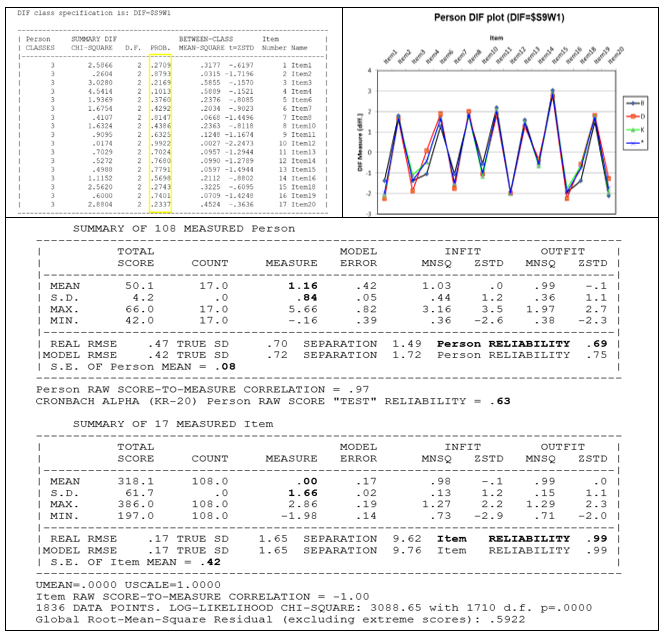
Measuring teachers' beliefs about mathematics teaching: A Rasch analysis of a deep learning approach
Abstract views: 0
PDF downloads: 0
921-940 Pages
Muhtarom Muhtarom,
Department of Mathematics Education, Universitas PGRI Semarang,
Indonesia
Ahmad Wachidul Kohar,
Department of Mathematics Education, Universitas Negeri Surabaya,
Indonesia
Sugiyanti Sugiyanti,
Department of Mathematics Education, Universitas PGRI Semarang,
Indonesia
Irkham Ulil Albab,
Department of Mathematics Education, Universitas PGRI Semarang,
Indonesia
Sri Rejeki,
Department of Mathematics, Universiti Pendidikan Sultan Idris,
Malaysia
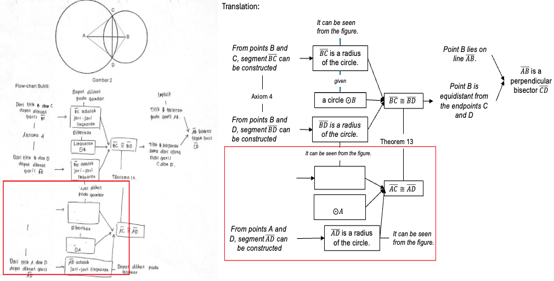
Cascading cognitive failures in geometric proof construction: A qualitative study of prospective mathematics teachers
Abstract views: 0
PDF downloads: 0
941-970 Pages
Lathiful Anwar,
Department of Mathematics, Universitas Negeri Malang,
Indonesia
Isma'ul Khusna,
Department of Mathematics, Universitas Negeri Malang,
Indonesia
Cholis Sa'dijah,
Department of Mathematics, Universitas Negeri Malang,
Indonesia
Santi Irawati,
Department of Mathematics, Universitas Negeri Malang,
Indonesia